
Why Your Lawn Has Brown Patches in August (And What to Do About It)
The Most Common Culprits
Not all brown patches are created equal. Before spending money on treatments, it's worth identifying what you're actually dealing with.
1. Summer Dormancy (No Treatment Needed)
Cool-season grasses — the dominant type in Lehigh Valley lawns — naturally enter semi-dormancy during extended heat and drought. When daytime temperatures exceed 90°F for more than two weeks without irrigation, turf crowns pull water and nutrients inward to survive, and the leaf blades brown out.
Dormant turf looks dead but isn't. It will green up within a week of significant rainfall or resumed irrigation. The mistake many homeowners make is trying to break dormancy mid-summer with irrigation — starting and stopping this cycle stresses the plant more than consistent dormancy.
2. Grub Damage (Requires Treatment)
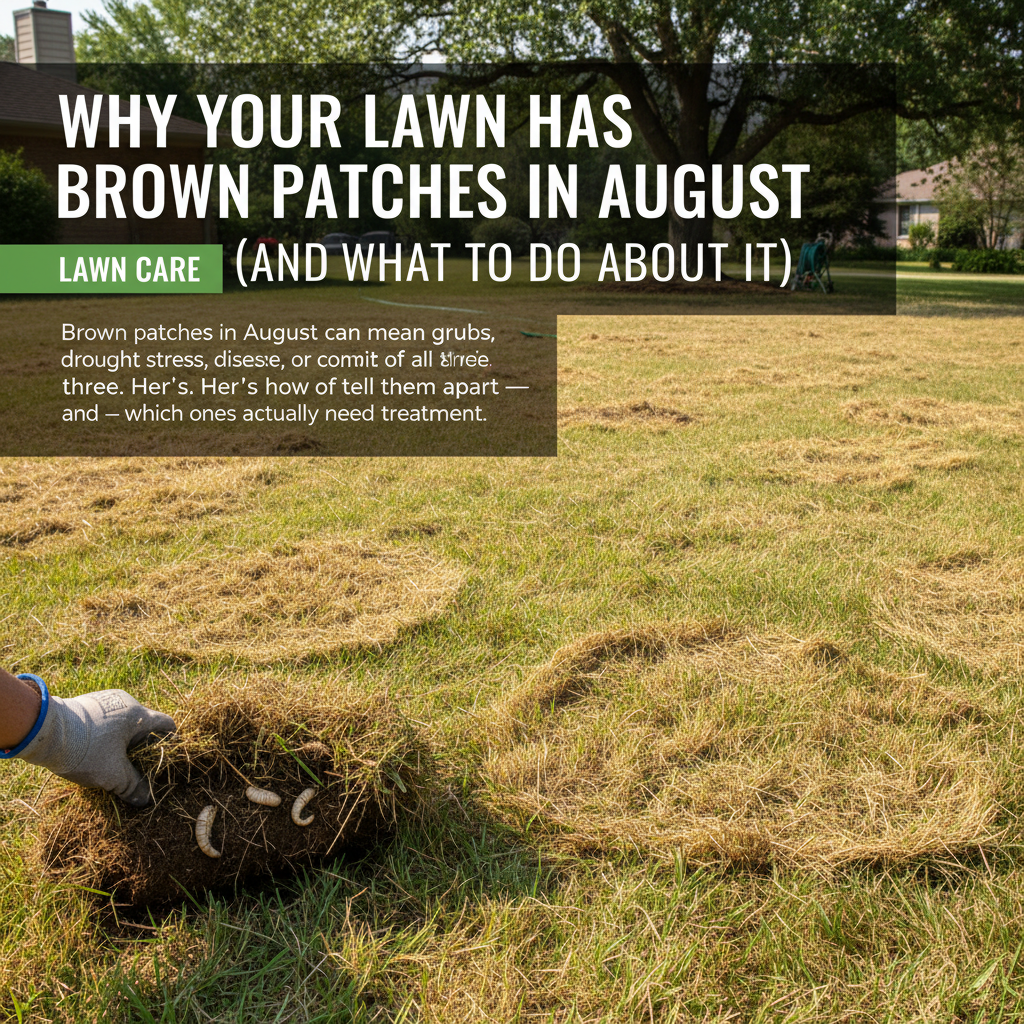
Grub damage typically appears in irregular, expanding patches from late July through September. The distinguishing test: grab a handful of turf and pull. If it rolls back like a loose mat — roots severed — grubs are almost certainly the cause.
Look for spongy turf, increased bird activity (crows and starlings hunting grubs), and skunk digging along the edges of brown areas.
Treatment: Curative grub applications (chlorantraniliprole or trichlorfon) applied with immediate watering can stop active damage. Heavily damaged areas will need overseeding in fall.
3. Brown Patch Disease (Fungal)
Brown patch (Rhizoctonia solani) is a fungal disease that thrives when nighttime temperatures stay above 70°F with high humidity — exactly the conditions we see in Lehigh Valley Julys and Augusts.
Brown patch appears as roughly circular patches 6 inches to several feet in diameter, often with a dark, water-soaked ring at the perimeter (the "smoke ring"). It spreads rapidly in wet conditions and through mowing.
Treatment: Fungicide applications can arrest active brown patch. Cultural controls — reducing nitrogen in summer, watering in early morning, improving air circulation — are equally important.
4. Dog Damage
Small, round dead patches 4–8 inches in diameter with a green ring at the border are almost always dog urine burn. The nitrogen in urine essentially over-fertilizes a small area. No disease or pest treatment will help — these areas need to be overseeded in fall.
The Fall Recovery Window
Regardless of cause, late August through September is the ideal repair window for all types of summer lawn damage. Core aeration followed by overseeding can recover most damaged areas in 3–4 weeks under normal growing conditions.