
Lawn Services
Lawn Insects & Grub Control
Brown patches, spongy turf, and mystery damage are often caused by lawn insects — grubs, chinch bugs, sod webworms, billbugs, and more. We identify the pest and eliminate it before it destroys your lawn.
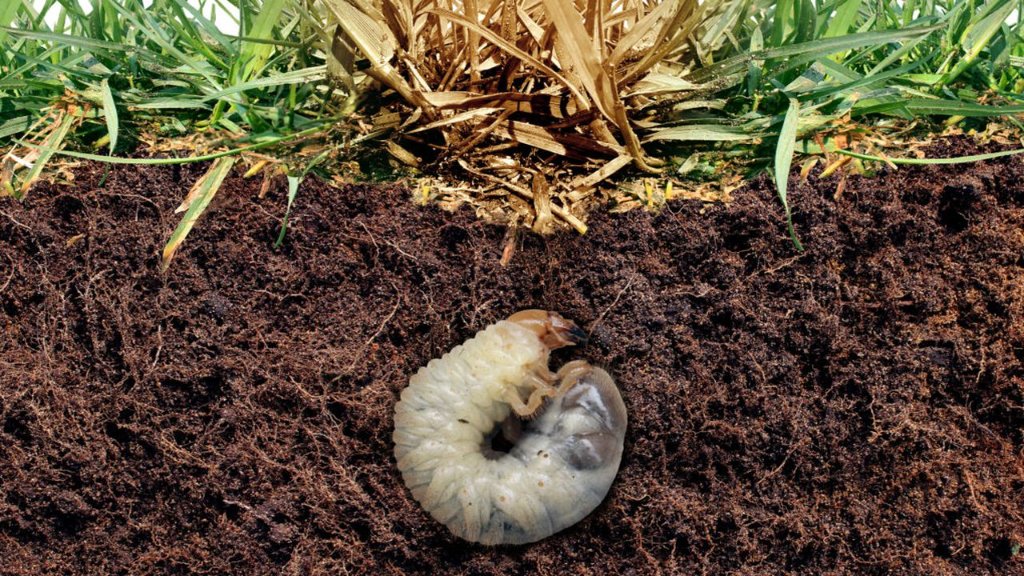
White Grubs
Subsurface FeederActive Season: Late Spring – Fall
Damage
Severs grass roots 2–4 inches below the surface. Turf lifts like a carpet and brown patches expand rapidly through late summer.
Warning Signs
Spongy turf, irregular brown patches, birds and wildlife digging at the lawn surface. Turf peels back easily with no root system attached.
Treatment Approach
Preventive treatment in June–July before eggs hatch is most effective. Curative fast-acting chemistry for active late-summer infestations.
What Are Grubs and Why Are They Destroying My Lawn?
White grubs — the larval stage of Japanese beetles, European chafers, and other scarab beetles — are voracious feeders that live 2–4 inches below the soil surface. From late summer through fall, they feed relentlessly on grass roots, severing the plant's ability to uptake water and nutrients.
By the time brown patches appear in August, the damage is often already done for that season. This is why preventive treatment — applied in June when adult beetles are laying eggs — is far more effective than waiting for visible damage.
Our licensed technicians apply imidacloprid or chlorantraniliprole-based preventive treatments during the optimal soil temperature window, followed by irrigation activation. For active infestations, we use fast-acting curative chemistry that targets existing grub populations.
Warning Signs of a Grub Infestation
If you notice any of these, call us for a free assessment before the damage spreads.
Spongy or soft turf
Grubs sever grass roots, causing turf to lift like loose carpet.
Irregular brown patches
Dead turf appears in irregular shapes, typically expanding throughout summer.
Increased bird activity
Crows, starlings, and robins pecking at your lawn are hunting grubs below the surface.
Skunk and raccoon digging
Nocturnal digging along turf edges is a tell-tale sign of heavy infestation.
Turf pulls up easily
A healthy lawn won't lift. If sections roll back like a mat, the roots are gone.
Preventive Treatment
Applied in June when adult beetles are beginning to lay eggs. Systemic chemistry is absorbed by turf roots and kills newly hatched grubs before they can establish. Most effective approach — stops damage before it starts.
Best timing: Late May – July
Curative Treatment
Applied when active damage is present, typically late July through September. Fast-acting chemistry kills existing grubs but requires precise timing and immediate irrigation. Damaged areas will need overseeding to recover.
Best timing: Late July – September
Other Lawn Insects Common in Pennsylvania
Grubs aren't the only insects destroying Lehigh Valley lawns. Surface-feeding and crown-feeding insects cause damage that's often misdiagnosed as drought, disease, or nutrient deficiency.
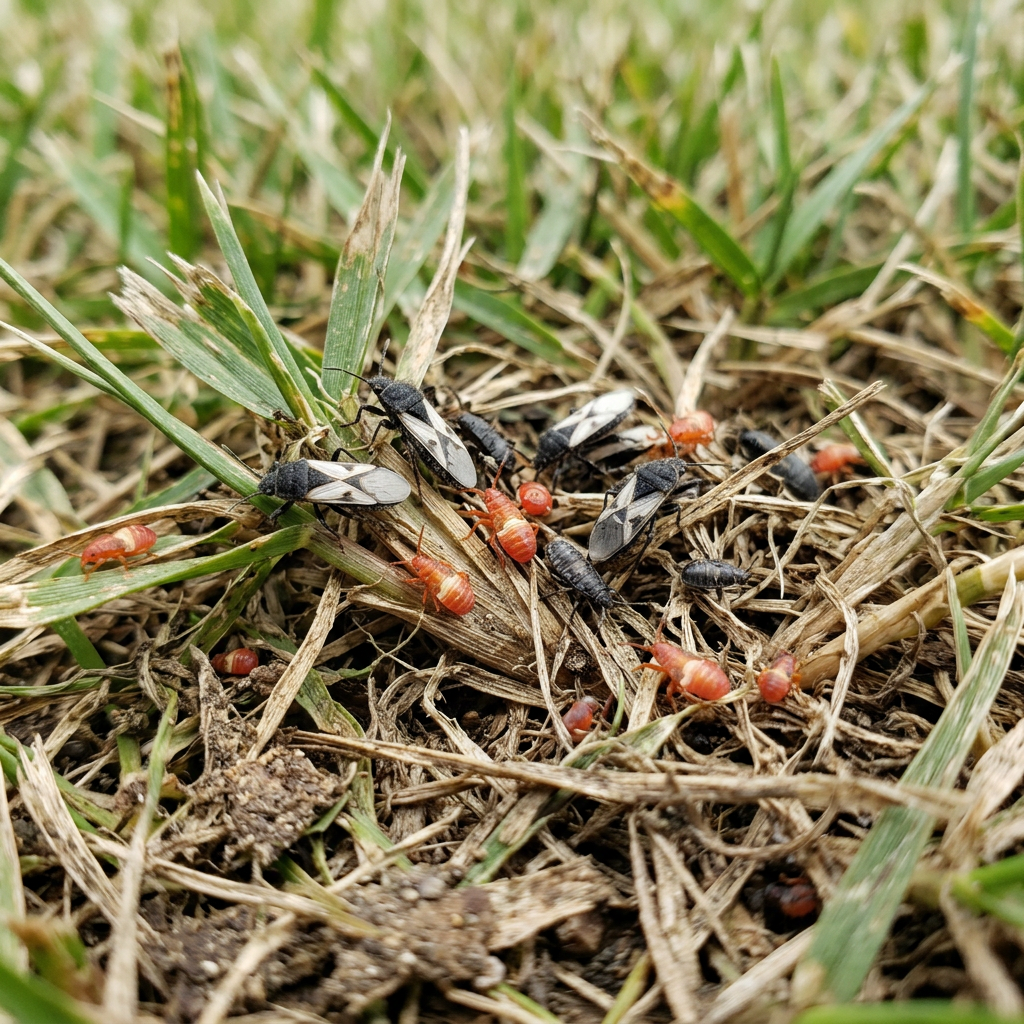
Chinch Bugs
Surface FeederActive Season: June – September
Damage
Yellowing patches that expand outward in hot, dry weather. Often misidentified as drought stress.
Warning Signs
Turf turns yellow then straw-colored. Most damage occurs along sunny, dry edges of the lawn. Adults are tiny (1/5 inch) — look for them at the thatch layer.
Treatment Approach
Insecticide applications targeting thatch layer during peak summer heat. Improving thatch management and overseeding with resistant varieties reduces future risk.
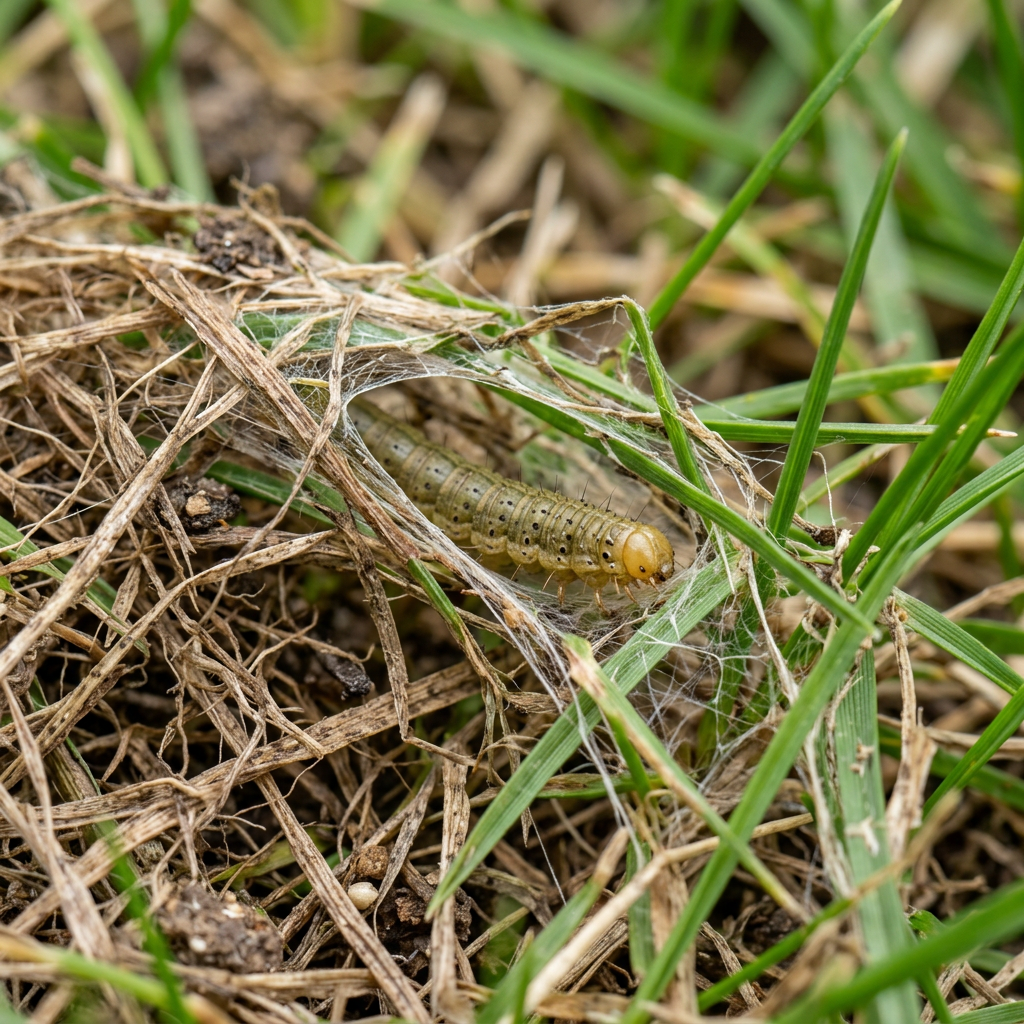
Sod Webworms
Surface FeederActive Season: July – September
Damage
Irregular brown patches where larvae chew grass blades at the soil surface. Small tan moths flying in a zigzag pattern at dusk are a key indicator.
Warning Signs
Close-cropped brown areas with silky tunnels visible in the thatch. Birds actively pecking the lawn. Green fecal pellets in the thatch layer.
Treatment Approach
Targeted surface insecticide applied in late afternoon when larvae are most active. Best results when grass is watered before application to drive larvae upward.
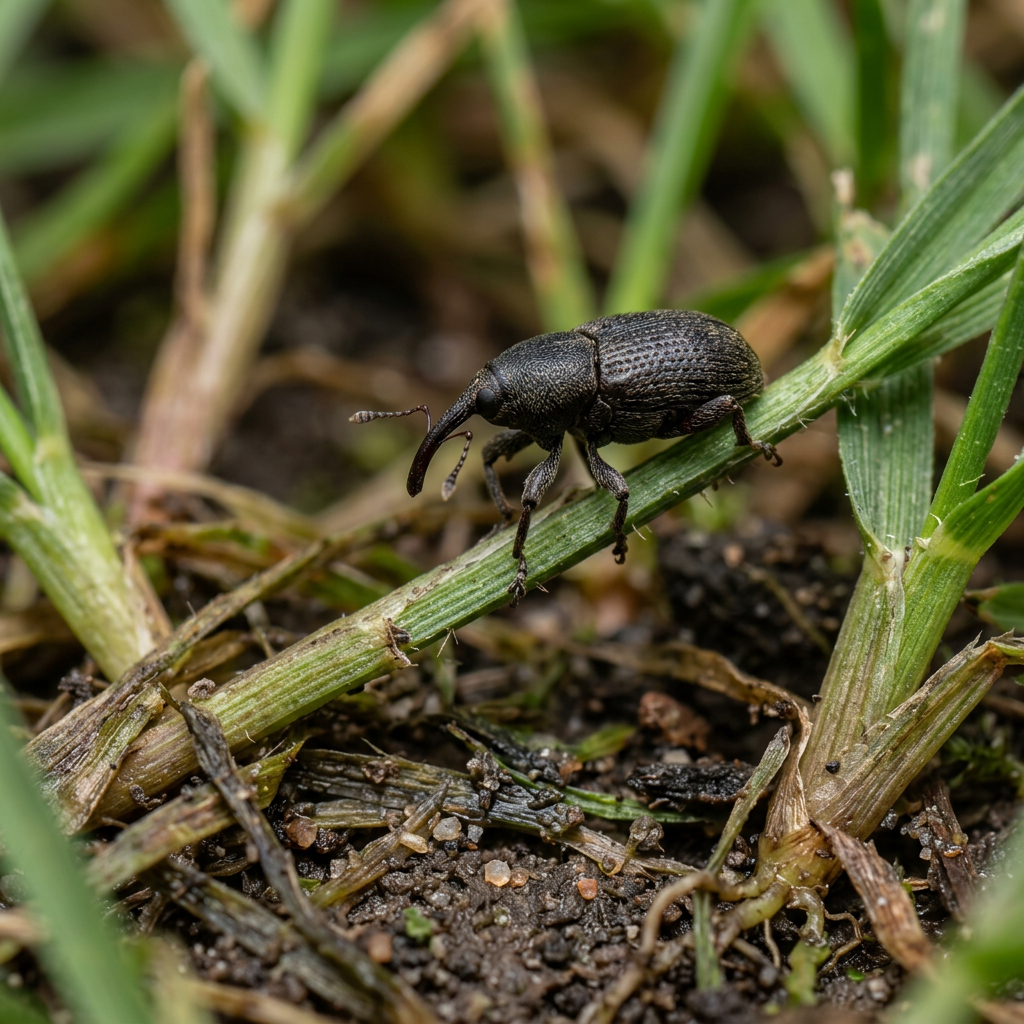
Billbugs
Crown & Root FeederActive Season: May – September
Damage
Circular dead patches that do not respond to watering. Turf pulls up easily; stems snap off at the crown with a sawdust-like frass visible inside.
Warning Signs
Stems break cleanly at soil level with no root system attached. Adult billbugs (weevils) seen crossing driveways or sidewalks in late May.
Treatment Approach
Preventive insecticide in late spring targets adults before egg-laying. Curative treatments are less effective — timing is critical for this pest.
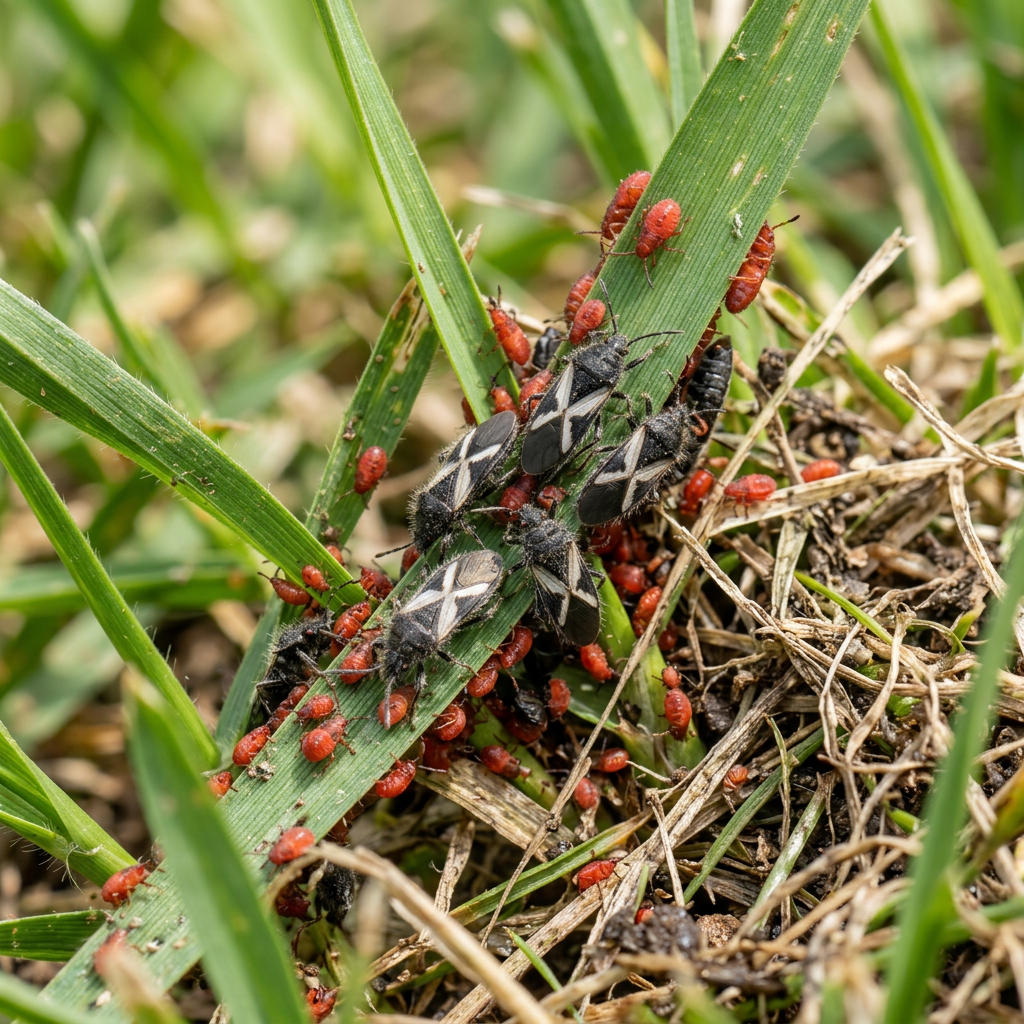
Hairy Chinch Bugs
Surface FeederActive Season: June – August
Damage
Distinct from common chinch bugs — more prevalent in tall fescue and Kentucky bluegrass. Causes yellow-to-brown wilting patches that spread rapidly in hot weather.
Warning Signs
Part the grass at the edge of damage and look for tiny nymphs (red with white band) or adults at the thatch layer. Most visible in early morning.
Treatment Approach
Foliar insecticide applications targeting the thatch zone. Reducing thatch buildup through aeration significantly reduces population pressure.
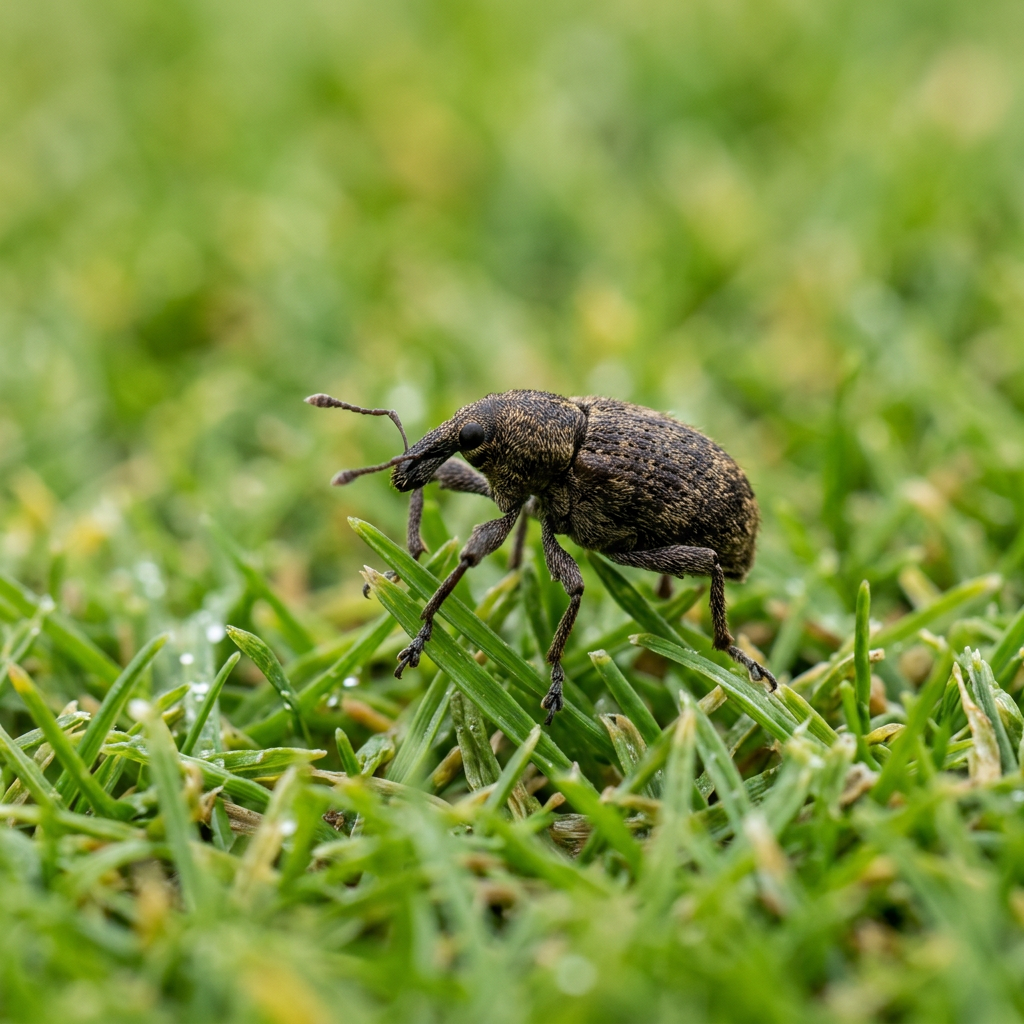
Annual Bluegrass Weevil
Crown & Root FeederActive Season: April – June
Damage
Early-season thinning and browning in high-maintenance turf. Larvae feed on stems and crowns of annual bluegrass and fine-bladed turf.
Warning Signs
Yellowing in early spring that doesn't respond to fertilization. Most common in golf course fairways and closely mowed turf areas.
Treatment Approach
Preventive granular or liquid insecticide applied when forsythia is in bloom (adult emergence window). Timing is everything for this pest.
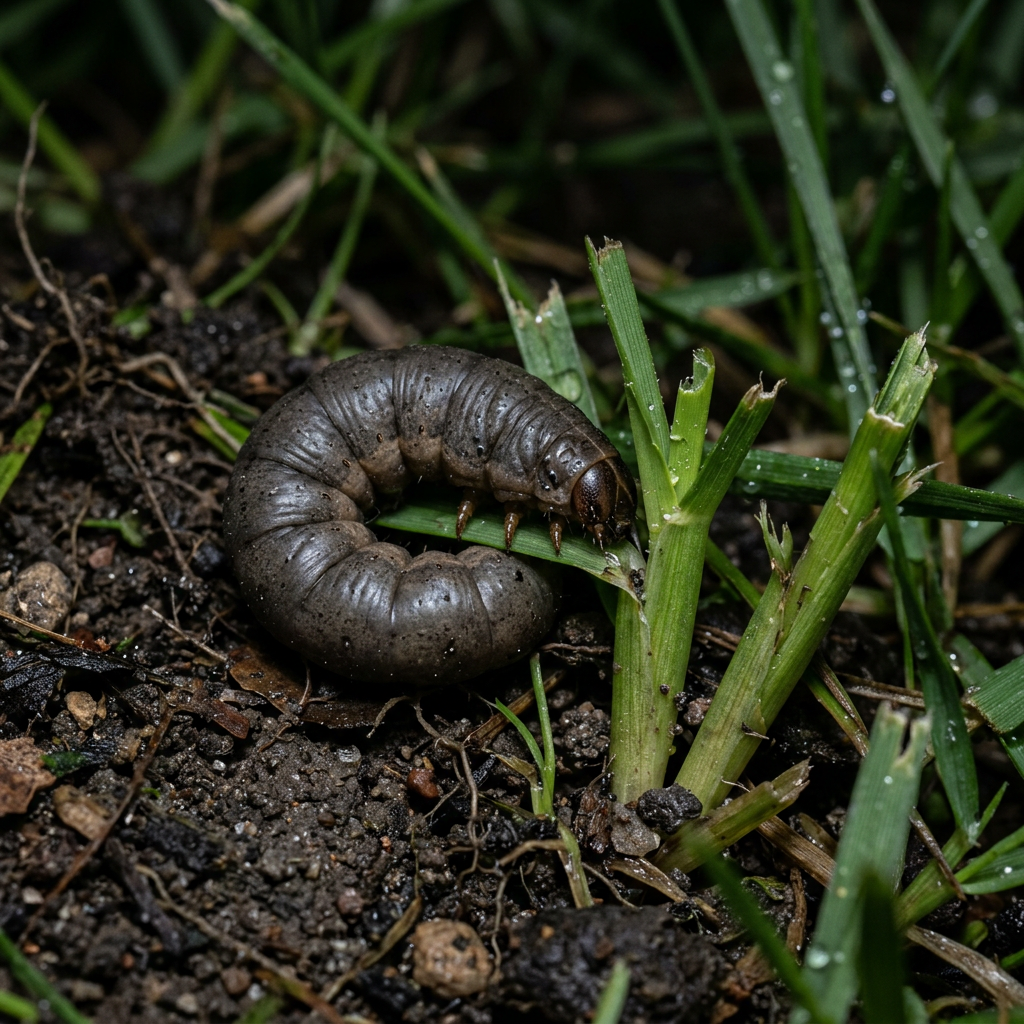
Cutworms
Surface FeederActive Season: May – October
Damage
Circular patches of closely cropped or severed grass, typically appearing overnight. Larvae cut grass stems at soil level, similar to webworm damage but in cleaner circles.
Warning Signs
Small circular patches of dead grass. Larvae (1–2 inch caterpillars) found at soil surface at night or early morning. Moths attracted to lights in evening.
Treatment Approach
Surface insecticide applied in the evening when larvae are active. Biological controls including Bacillus thuringiensis (Bt) are effective on young larvae.
The Lawn Insect Lifecycle — Why Timing Matters
Most lawn insects are only vulnerable to treatment during specific lifecycle windows. Applying the wrong product at the wrong time is ineffective and wasteful. Our technicians time every application to the pest's lifecycle stage.
Egg
June – July
Most soil insects lay eggs after adult emergence in late spring. This is the prime window for preventive treatments.
Young Larva
July – August
Newly hatched larvae are small, near the surface, and most vulnerable to insecticide treatments.
Mature Larva
August – October
Fully grown larvae cause maximum turf damage as they feed aggressively before cold temperatures arrive.
Overwintering
November – March
Larvae move deeper in the soil profile to survive winter. No surface treatment is effective during this period.
Pupation
April – May
Larvae pupate and transform into adults, moving back toward the surface.
Adult Emergence
May – June
Adult beetles emerge, feed on ornamental plants, mate, and begin laying eggs — restarting the cycle.
Why DIY Insect Control Often Fails
Big-box store grub and insect products contain the same active ingredients professionals use — but timing, rate, and application method make all the difference. A preventive grub product applied two weeks too late in the season may provide zero control. The same goes for surface-feeding insects, which are often active for only a narrow 3–4 week window.
Misidentification is another common problem. Chinch bug damage looks like drought. Billbug damage looks like a fungal disease. Applying a fungicide to a billbug infestation — or vice versa — costs money and allows the real problem to worsen.
Our licensed technicians assess your lawn, identify the specific pest, and apply the right chemistry at the right time. We track soil temperatures, monitor pest degree-day models, and adjust timing based on Lehigh Valley seasonal conditions.
What's Included in Our Insect Program
Protect Your Lawn from Insects & Grubs
Get a personalized lawn insect control estimate — grubs, chinch bugs, webworms, billbugs, and more.
Get Your Free Estimate