Tree Services
Disease Treatment
From emerald ash borer to oak wilt, our licensed arborists diagnose and treat tree diseases before they become irreversible — preserving your mature canopy investment.
Early Detection Changes Outcomes
A mature tree represents decades of growth, thousands of dollars in appraised value, and irreplaceable ecological function on your property. The difference between a treatable infection and an emergency removal is often just one growing season — and one missed diagnosis.
Our ISA Certified Arborists are trained in visual diagnostics, vascular sampling, and laboratory consultation for complex cases. We bring the same rigor that an experienced physician brings to difficult clinical presentations — systematic, evidence-based, and honest about what we know and don't know.
When treatment is possible, we use systemic trunk injections, soil drenches, and targeted fungicide applications that reach the site of infection directly — not surface sprays that miss the pathogen entirely.
Diseases & Pests We Treat
Each entry includes urgency guidance, diagnosis notes, and our standard treatment approach.
Fungal Disease
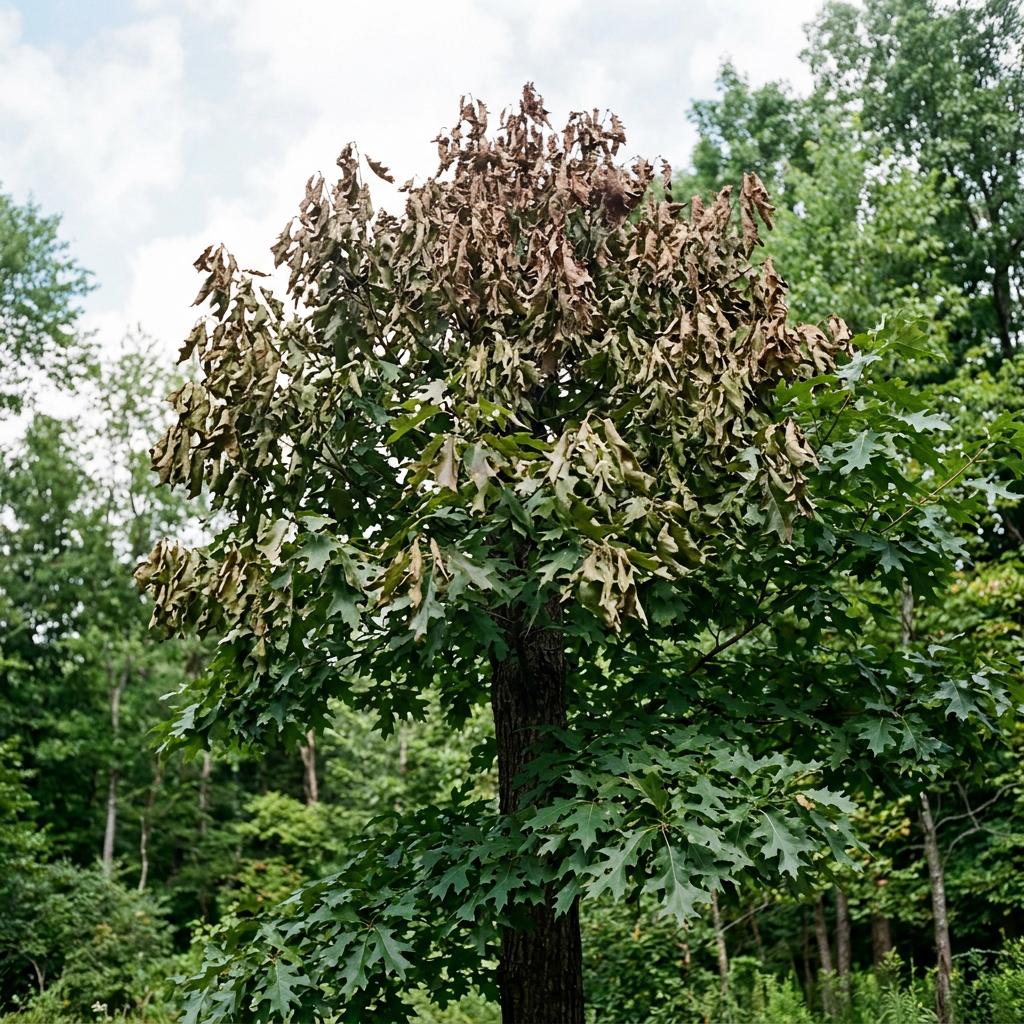
Oak Wilt
One of the most aggressive tree diseases in North America. Red oaks can die within 4–6 weeks of infection. The fungus blocks water-conducting vessels, causing rapid wilting from the top of the crown downward.
Treatment
Propiconazole trunk injection can halt progression in early cases. Root graft disruption via trenching is required to prevent spread to adjacent oaks.
Fungal Disease
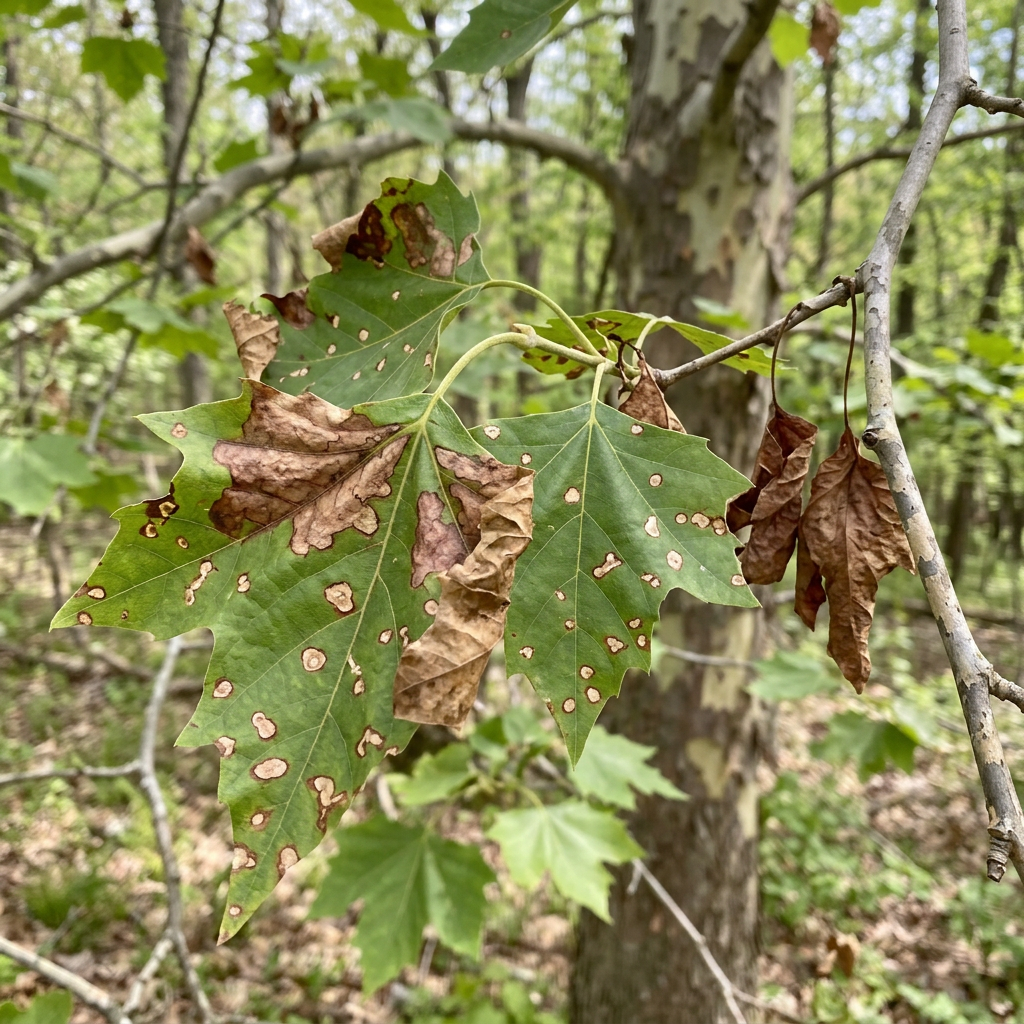
Anthracnose
A group of fungal diseases affecting sycamore, oak, maple, dogwood, and ash. Causes defoliation, twig dieback, canker formation, and leaf spots with tan or brown margins. Most common in wet springs.
Treatment
Improving air circulation through selective pruning, removing infected leaf litter in fall, and preventive fungicide applications in early spring.
Soilborne Disease
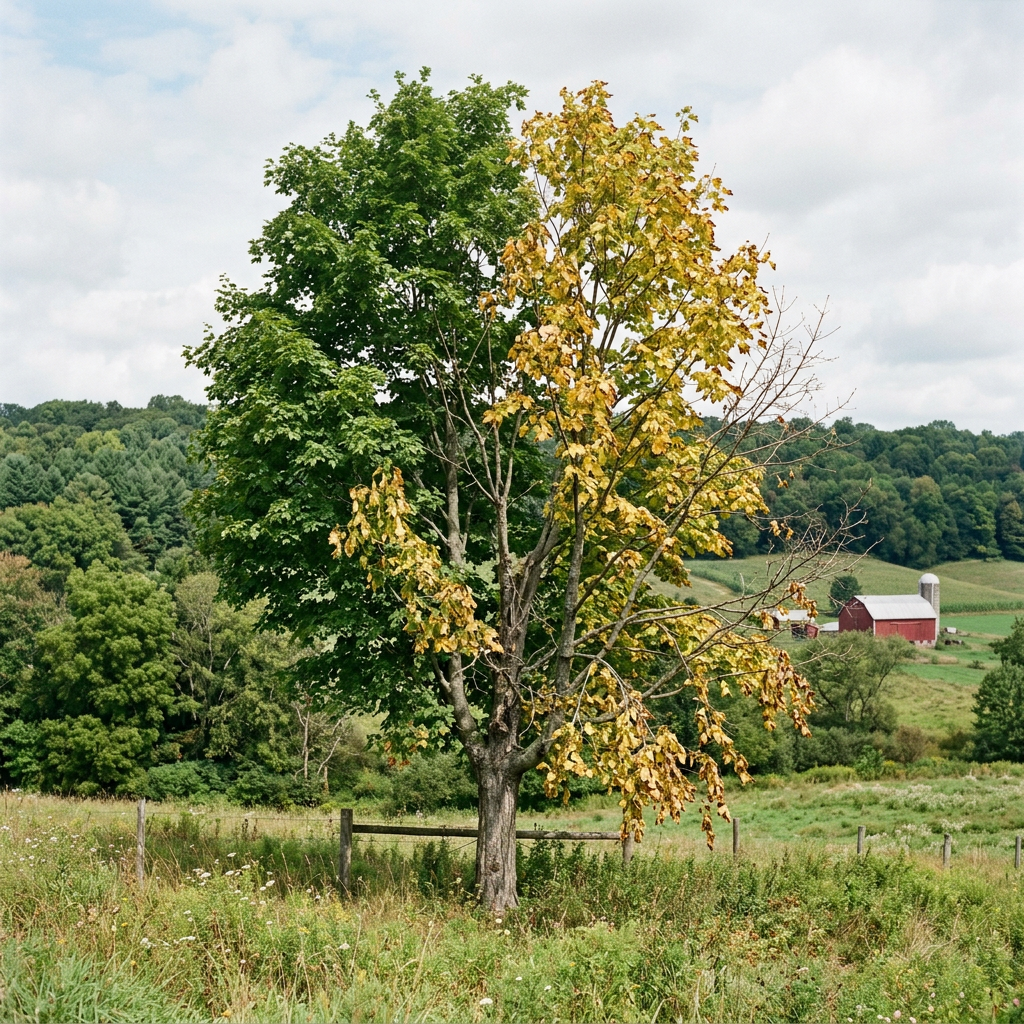
Verticillium Wilt
A persistent soilborne fungus commonly affecting maples, dogwood, elm, and hickory. Symptoms include one-sided wilting, branch dieback, and eventual decline over years.
Treatment
No curative treatment exists. Management focuses on deep watering, organic mulch, balanced fertilization, and selective pruning of wilted branches.
Bacterial Disease
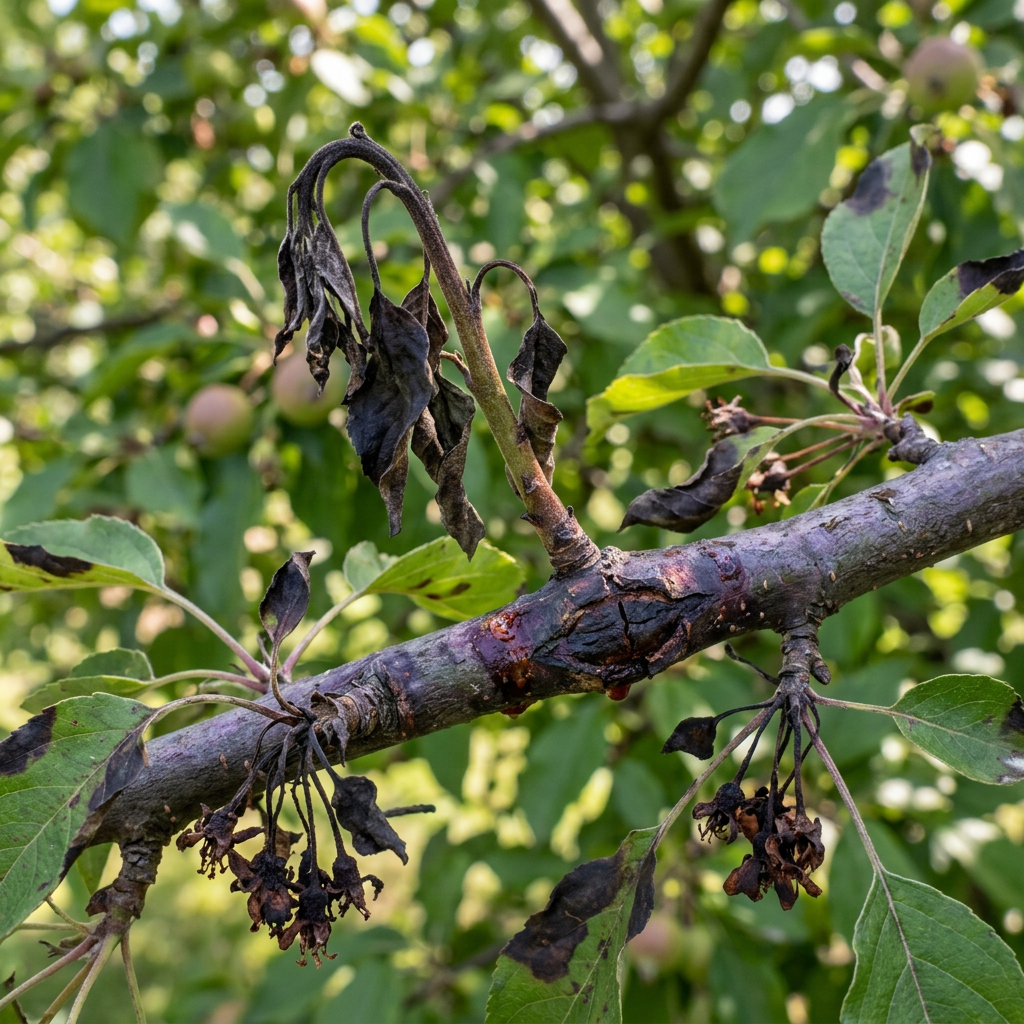
Fire Blight
Bacterial infection affecting crabapple, pear, apple, serviceberry, and hawthorn. Causes wilting branch tips in a "shepherd's crook" pattern, blackened blossoms, and cankers.
Treatment
Aggressive pruning of infected tissue 12 inches below visible margin using sterilized tools. Copper-based bactericides applied at bud break reduce infection.
Fungal Disease
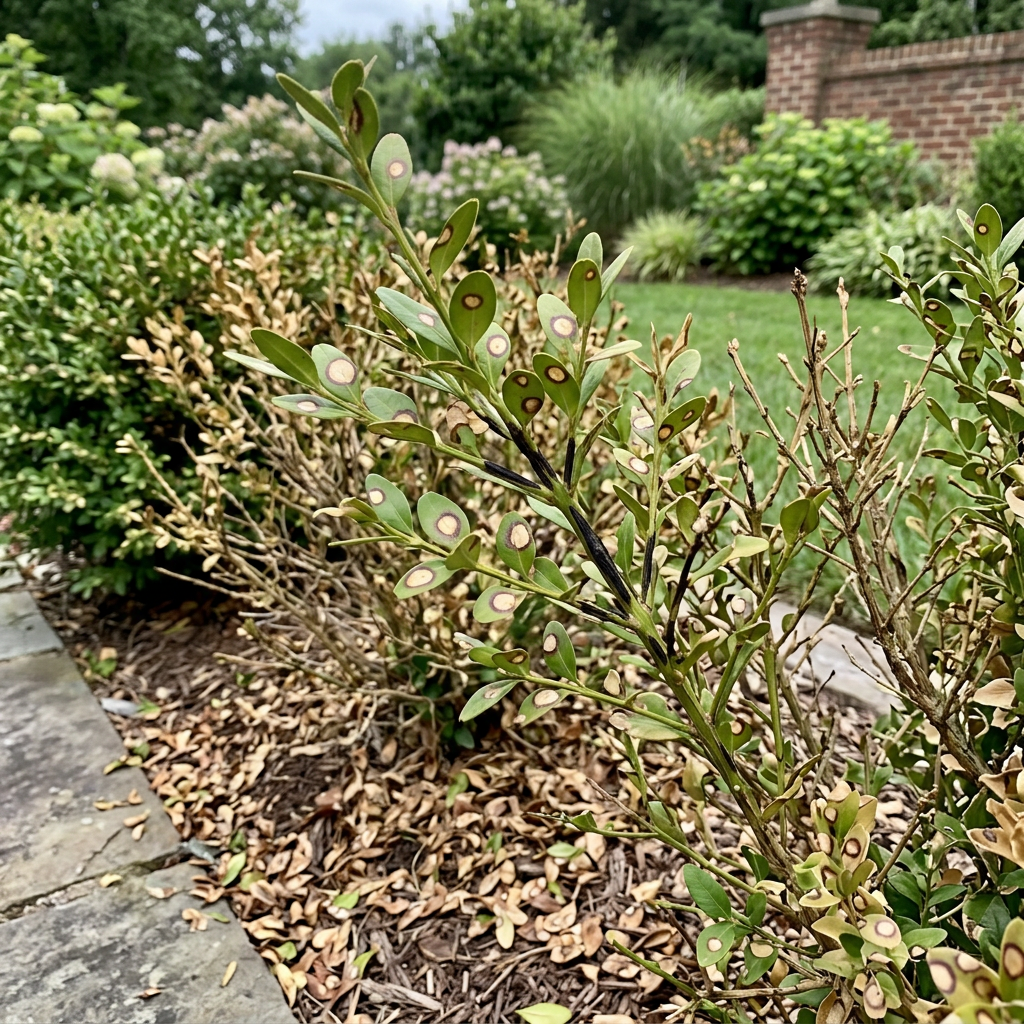
Boxwood Blight
A rapidly spreading fungal disease affecting boxwood hedges and ornamental plantings. Causes rapid leaf spot, stem cankers, defoliation, and plant death within weeks.
Treatment
Prune infected branches immediately and sterilize all tools. Fungicide applications suppress spread. Replace with resistant cultivars like Chicagoland Green.
Soilborne Disease
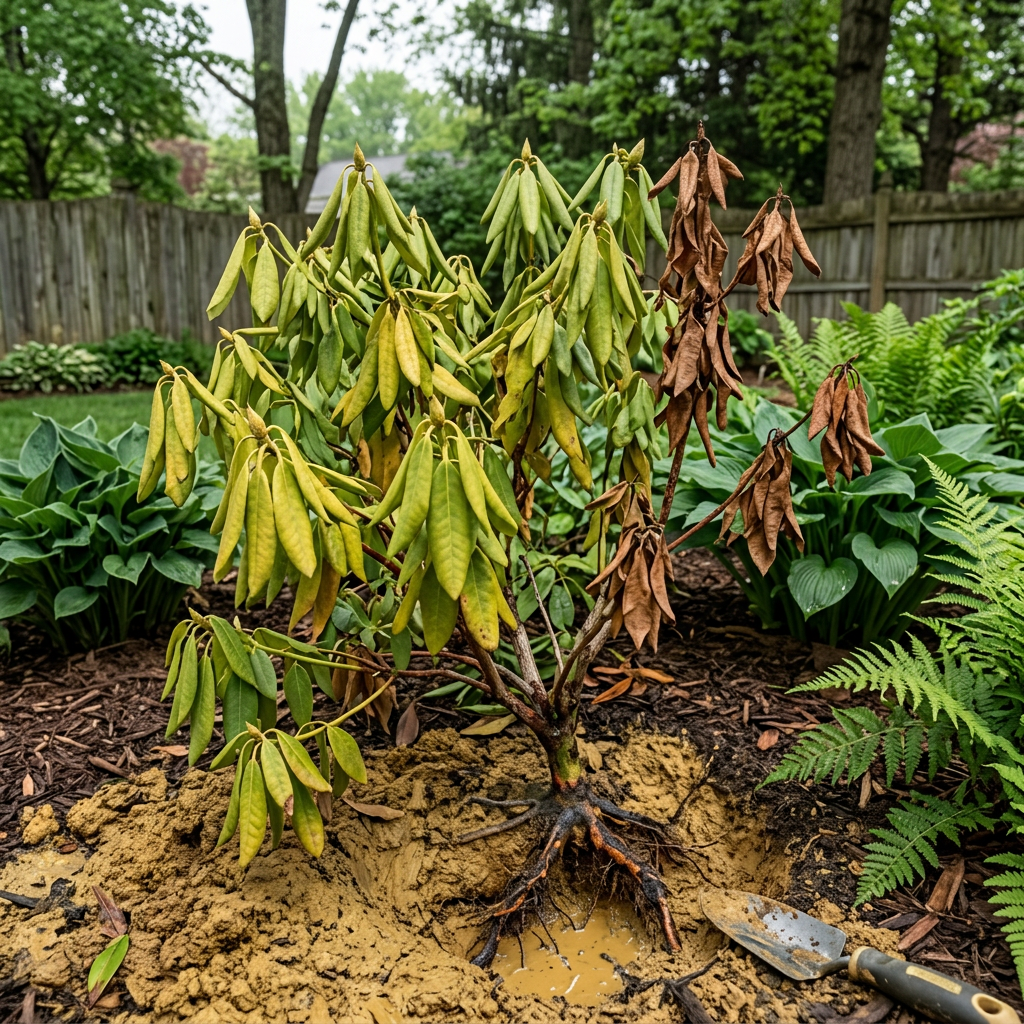
Phytophthora Root Rot
A water-loving pathogen causing root rot in rhododendrons, dogwoods, and conifers in poorly drained soils. Symptoms include wilting, yellowing foliage, root death, and eventual plant collapse.
Treatment
Improve drainage with raised beds or French drains. Treat with phosphite fungicides applied to soil. Replace severely damaged plants with species suited to wet conditions.